

Steroids & Blood Sugar Management
Quick Overview: Why Steroids Raise Blood Sugar
Steroids (also called glucocorticoids) can significantly increase blood sugar levels.
Here’s how and why:
- They reduce insulin sensitivity, especially in the liver and muscles, meaning your body needs more insulin to keep glucose in check.
- At higher doses, steroids can also suppress insulin production.
- The effect on glucose depends on:
- Type of steroid (e.g., prednisone, dexamethasone, medrol)
- Dosage (low vs. high)
- How often it’s taken (once daily vs. multiple times per day)
Steroid Timing = Blood Sugar Pattern
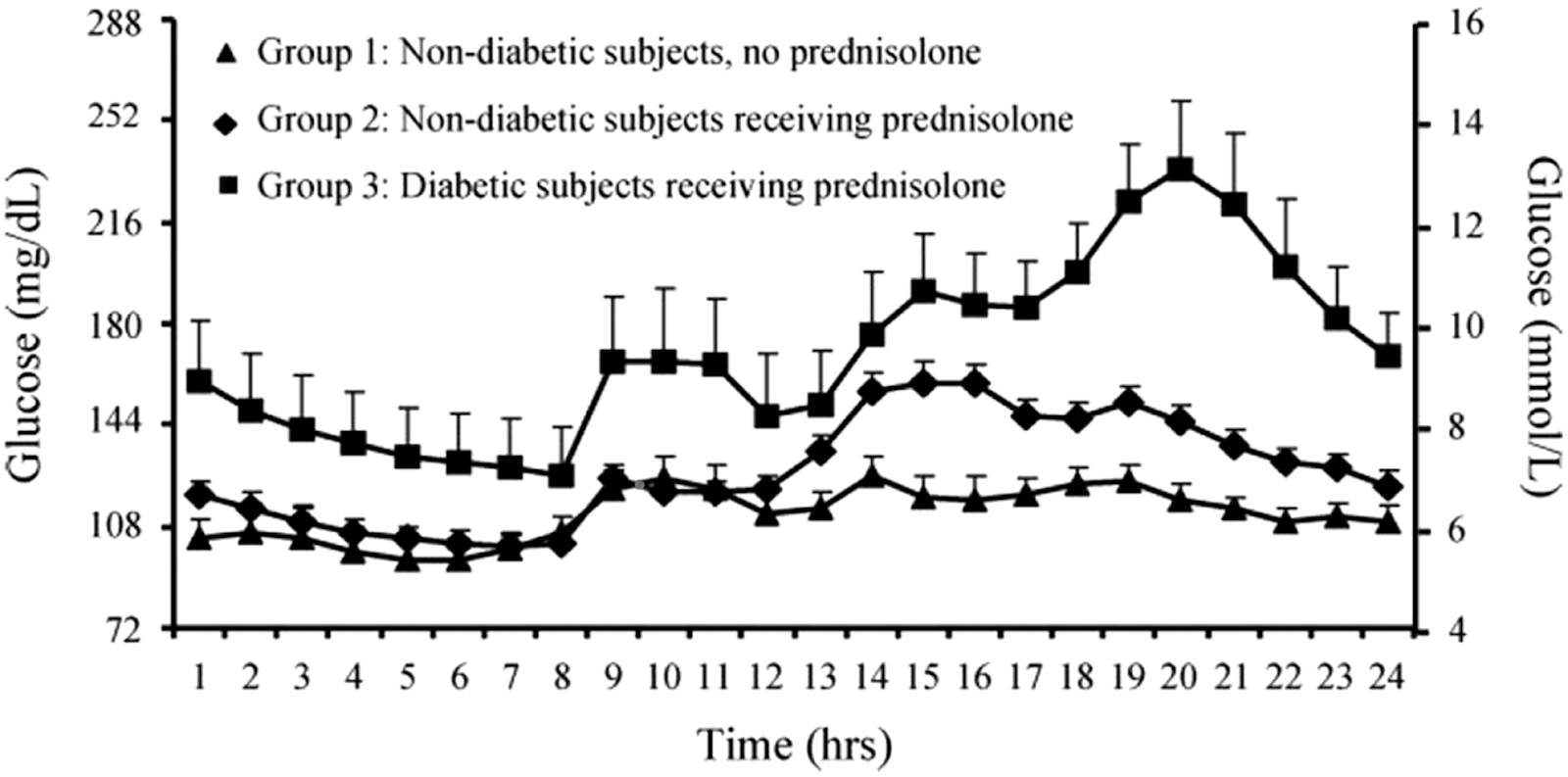
Different steroids work differently in the body. Here’s how they typically behave with blood glucose: Example: If prednisone is taken once in the morning, you might see a spike in glucose after breakfast, a bigger rise after lunch, and then a gradual drop overnight. Fasting glucose can still look fairly normal by morning.

Before Making Insulin Adjustments, Assess the Following with your physician:
- When will the steroid start?
- What’s the name of the steroid? (Prednisone, Medrol, or Dexamethasone)
- What dose and how often is it given?
- How long is the course? When is the last dose scheduled?
When to Adjust Insulin
- Start adjustments: ~6 hours after the first steroid dose
- Stop adjustments: When the steroid is discontinued
Insulin Adjustments Differ by Steroid Type & Dose
Prednisone (Once Daily in the AM)
-
Low Dose (10–30 mg/day)
-
High Dose (>30 mg/day)
Medrol Dose Pack (Taken 2–3 Times Daily)
If Medrol is taken once daily, follow the Prednisone once-daily plan
Dexamethasone
-
Low Dose (<2 mg/day)
-
High Dose (>2 mg/day)
Steroid Injections
- You will likely require different adjustments for basal vs bolus insulin
Extra Tip:
Need to calculate steroid potency or compare types? Use the GlobalRPH corticosteroid equivalency tool online for conversions.
Feel free to share this with your physician and develop a plan to management your diabetes while under steroid therapy.

Recent Stories

Choosing Your 2027 Medicare Plan: An Open Enrollment Guide for People with Type 1 Diabetes
We have created this guide on how to choose your 2027 medicare plan including important dates, commons mistakes, and a checklist of things to do. There are also special insights on what you need to keep in mind, programs that could be helpful, and changes from the previous year. Read the full article for everything you need to know!

Intrinsic Capacity: The Most Important Longevity Term You’ve Probably Never Heard Of
Intrinsic Capacity is a new term experts are hoping to use to determine a person’s overall health in an effort to implement interventions for a longer, healthier, and happier life. Intrinsic Capacity is measured in five different key areas including cognition, locomotion, sensory capacity, psychological well-being, and vitality. Several studies are being implemented across the US to learn more on how to improve the accuracy of this metric and use it, eventually, for all ages.

LADA: Why So Many Adults Are Misdiagnosed With Type 2 Diabetes
A YouTube discussion from Taking Care of Your Diabetes (TCOYD) on why 4 in 10 people who are diagnosed with Latent Autoimmune Diabetes in Adults (LADA) are told they have Type 2 Diabetes first and the impact of this misdiagnosis on their health and progress.