

Interview: What’s it Like When Your Partner Has Type 1 Diabetes Too? For This Couple it’s Pretty Darn Sweet.
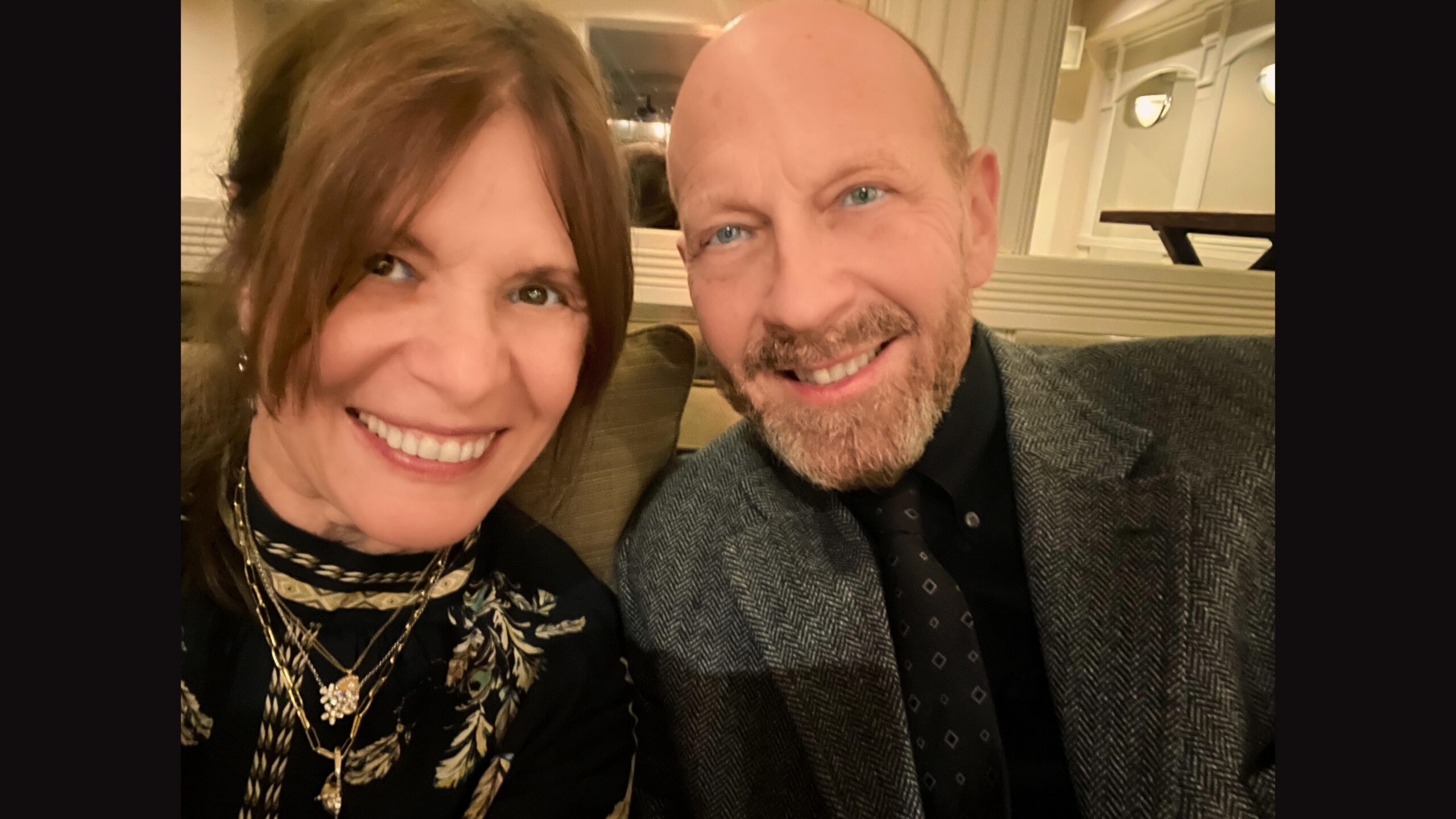
Above is Liz and John.
Interviewed for T1D100.com by riva greenberg, posted April 3rd, 2026.
When I interviewed married couple Liz Cooke and John Madden, they were each in one of their two homes, upstate New York and Brooklyn respectively. I chided, “Aha, the secret to a happy marriage!” Had I been serious, how wrong I would have been. My curiosity before our talk was “Is it helpful to have a spouse or partner who also has type 1 diabetes, or is it a burden?” There are 88 years of combined experience living with T1D in the Cooke/Madden household—and a lot of love, support, humor and pump supplies. You’ll learn just how much diabetes is a strength in this marriage and what, based on this union, John said a few days later when asked, “If there were a stem cell cure without need for immunosuppressants would you take it?”
Liz Cooke: Diagnosis Age: 36, Current Age: 67, Years with T1D: 31
John Madden: Diagnosis Age: 14, Current Age: 71, Years with T1D: 57
How They Met
riva: Let’s start where you started as a couple, how did you meet?
John: Liz, would you like to take the lead?
Liz: No, John, I’d love to hear your variation on this theme….
John: Okay, but then you’ll have to hear it from Liz because it will be entirely different.
John explained it was 1995, the Saturday evening before the New York City marathon. As he’d done for a few years, John hosted a dinner for runners with Type 1 Diabetes, and volunteers and friends, through the International Diabetic Athletes Association (IDAA). Liz, who was diagnosed just the year before, joined the IDAA to learn how to keep active without having her blood sugar constantly crashing.
Liz: This is where my story takes a little left turn. The President of the IDAA said to me, “You should go to this party at this guy John’s house. I know you’re single, and he’s single, and he’s a lawyer. There’ll also be a single doctor there.” So I went. As soon as I walked in I felt like I had found my people, and along the way, I married this one.
Both Liz and John had been married before. Liz’s first husband, an Israeli inventor and politician, joked before they knew she had diabetes, that they should get a waterbed and hook her up to the spigot because for days she would lie on their bed drinking volumes of liquid.
Liz: We were living in the West Village and I remember I was shopping at my local supermarket and there was nothing in my cart but bottles of seltzer. I definitely had diabetes. I was feeling unwell, I had been to the doctor numerous times, but no one said “diabetes.”
riva: John you were also married before and you got diabetes at fourteen so I’m assuming your wife knew of your diabetes.
John: Yes, after a few dates I confessed. Although I didn’t admit it to many people back then. I think I felt some shame. Remarkably, my brother and I were diagnosed on the same day. So we learned together in the hospital how to manage it. I think in some ways I wanted my wife to understand it like that. I sometimes felt, “Why can’t she get it, just get with the program?” But how could she? I had lows, but not terrible lows. I never ended up in the hospital. So she was always on the outside looking in, on the other side of the looking glass, whereas Liz is right inside with me.
riva: Did you ever wonder after you met whether this was a good idea, to get involved with someone else who had diabetes? In my own head, I just can’t imagine what it would be like and how I would feel about it.
Liz: Perhaps on some subconscious level it was a powerful connector, but I don’t even remember thinking about it. I was caught up in the attraction, the dance, my desire to be in a relationship with John.
riva: So the romance took center stage….
Liz: Oh, yeah.
John: For me, I would never say I want to go out with someone with Type 1 but as soon as we started going out, it was easy. I didn’t have to explain anything, and I didn’t have to hide anything.
riva: It sounds like having a partner with Type 1 is not the burden for you two it might be for others. Or maybe I’m hearing it’s a benefit.
Doing Diabetes Together
Liz: Yes, in every way. We purposefully got on the same treatment regimen early on. We use the same insulin, same pump, same CGMs, all the same equipment and see the same doctor. At one point I went off the pump, it was a hassle, it kept on kinking. I just needed a break, and so John took a break too. It lasted about six months and then we both went back on.
John: Being able to talk to Liz about what one of our doctors says, it’s like going to the doctor twice. Ninety percent of the problems that Liz will run into, I will run into. It may not be now, but I may as well listen to what she learns from the doctor for the future.
Liz: Of course there is one disadvantage to all of this being in sync: I don’t get to play the sympathy card! “You don’t understand, you don’t have this condition!” You know you can’t milk the diabetes.
riva: For me, having diabetes and working in diabetes, sometimes in the past felt like too much. It was like, “Oh, God, enough already.” Now, the fact that both of you have it, live with it, live together, does it ever just get to be too much diabetes in the house? You are both shaking your head no.
John: This is only a benefit. There can’t be too much diabetes in the house. Even if Liz has a problem, I just want us to get it corrected right away. I’ve accepted this is what we have and this is how it is. That acceptance came early in our marriage.
Liz: The lifestyle of having diabetes, how you eat, how you take care of yourself, how you exercise, keeping up with your supplies, all those things are great to do with a partner. And yes, John, I did eat the cookie you left on the counter the other day, but I covered it! See, I don’t have to explain that. There’s a shorthand we have whether it’s needing to hop on the treadmill, or walk around the block, or not be able to eat the dinner that the other one made because your blood sugar is too high. There’s no need to explain and there’s no nagging; we trust each other’s judgment.
riva: I’m curious, do you share your numbers with each other? Like my husband follows my CGM numbers.
Liz: We know each other’s A1C, but not so much our numbers during the day. Maybe that’s because, although I don’t know, I did have shame around my numbers in the beginning of our marriage. I had a lot of high blood sugars and was embarrassed taking higher doses of insulin. But then our first few years together things were really intense. We were trying to have a child and there were problems with the pregnancy, although I don’t think that was diabetes-related. Then adopting our daughter and bringing a child into a diabetic marriage. Then there was 9/11 and we lived not far from the World Trade Center. I think it all influenced my numbers. But I also think I did as well as I did because we were together.
riva: And maybe you felt some stress only having had diabetes a few years whereas John was a veteran with more than twenty five years experience?
John: Let me be clear, even though I’d had diabetes over twenty five years I was no shining beacon on the hill of control. It’s not like I was Mother Superior in the convent and she was the novice. I had lots of lows and highs. It may have been about the same as Liz, even though she was much newer to the game. It really got better when we got the technology to manage it better.
riva: I always say every day is a new day.
John: You know there are as many mistakes an experienced person can make as somebody new.
Liz: I will say, in the beginning my role was more like a student and John the teacher, but now I see my role as taking care of John. That’s definitely changed. I watch over him. If I see something off, like he’s shaky, I run in with the juice.
Bringing a Child into the Family

[John, Liz, and daughter Maria]
riva: Do you want to share about raising your daughter?
Liz: I think there is something really different when parents have Type 1 diabetes and you bring a child into that. Sometimes your child may be anxious about it and you have to manage your child’s anxiety. I feel you should give a child the information about diabetes but minimize it. But maybe that’s me. We could be under attack, and I’ll be like, it’s gonna be fine. It’s just a nuclear thing. It’ll blow over. But when you have a small child, they’re seeing syringes and vials of medicine in the fridge, let alone the effect of low blood sugar. One time I was driving with our daughter, maybe she was twelve or thirteen. You know that super awkward middle school age. I was going low and I had to ask her to go into a convenience store and get me a soda. That can be really awkward for a child. Of course she did it, but asking a child to tend to her parents, that’s something extra a child in a marriage like this has to deal with.
John: I think our daughter has a healthy concern about diabetes but isn’t overly anxious about it, or us. Liz never played it up. And she’s never seen her parents in an extreme situation or going to the hospital.
Liz: Actually she does think it’s hilarious when my blood sugar goes low because I get loopy.
Aging with T1D
riva: How do you both think about getting older with this condition?
Liz: Irrespective of diabetes, aging is a challenge and can be scary. But yes, these things that we do, like with our pumps, require fine motor skills and decent vision…what happens if those skills start to fade? I don’t have an answer to that at the moment.
John: Except that it helps to have another person whose abilities might be a little fady, too, but can help with a set change. Like Liz says, just aging brings challenges. I only have one kidney, but that’s not diabetes related. On the diabetes front, I don’t have retinopathy but I’ve had a couple of bleeds in my eye. Sometimes I worry about if we lose mobility. I had some trouble with my back a while ago and you know exercise is one leg of the stool for managing diabetes. But right now we’re both still active and both still work. (John is a lawyer and Liz a therapist and photographer). And I believe moving and work are integral to our mental health.
Liz: I’ll say diabetes rarely has the power to bring me down. Like for someone who is in recovery, we’ve put in enough “clean time;” we’ve been at it so long we’re pretty stable. But there are things that feed my soul. There’s my guy behind me, Bruce Springsteen (pointing to a poster), dancing, walking in nature, reading, and my friends. I have an amazing crew that goes back to childhood. There’s joy in all that.
riva: What would you tell someone newly diagnosed?
Liz: Stay focused on the present and be hopeful, some great things are coming. The islet cell transplant trials happening now are very promising. The immunosuppressant is new and it’s not killing the transplanted cells the way previous ones did.
John: But also don’t hold your breath. We know these things take time. I would say lean into any problems. Don’t turn away from them. Denial is not your friend. I’ve heard people say, “If I ignore it, I feel pretty good most of the time. Nothing bad’s gonna happen.” Don’t do that, that’s not going to work. Looking back I see I was in some denial. Letting people in is better.
riva: When my husband used to commute to the Netherlands for his work, we had a ritual that I would email him every morning and just write, “I’m up.” He had told me sometimes he pictured me lying on the kitchen floor, passed out from a low. When you’re apart like you are now, do you check on each other every day?
Liz: We talk every morning and do the New York Times Spelling Bee together. Then check in at night most of the time. But because we’ve had so many years of stable management we don’t have that anxiety you had with your husband.
John: Or maybe it’s because both of us having it gives us an implicit understanding he couldn’t have had.
riva: Last question, what’s one positive thing diabetes has given you?
John: Liz, that’s it, I could stop there. Also other people with Type 1 diabetes. That includes my brother and a cousin who got it about half a year before us, and friends on Facebook and the group lunch we now go to. And IDAA and all the runners. Other people with diabetes almost feel like brothers and sisters.
riva: For you Liz?
Liz: Everything. Just everything. My husband, my daughter, my work, my health, my life. You came from it. John’s heard me say this a million times, I’m a big believer in silver linings. Had my father not died when I was very young, I wouldn’t have had the money to go to college. College was life-changing in amazing ways. Had I not had the difficulties with my pregnancy, we wouldn’t have adopted our daughter. So, you know, there is hardly anything that I’ve been through that hasn’t led to something good.
I think Liz and John have found the ultimate silver lining in having a chronic disease. A partner who shares your daily joys, burdens and treatment regimen, and completely understands when, despite not wanting to raise your blood sugar, you eat the cookie they absentmindedly left on the kitchen counter.
One Final Note: A few days after our interview, I saw John at the quarterly lunch in NYC for people with Type 1 diabetes for more than 50 years. Liz was still upstate. We were answering the host’s question, “If there were a stem cell cure with no immunosuppressant would you take it?” When it came to John’s turn he answered, “Only if my wife did it. I wouldn’t want to do it unless she wanted to do it.”
riva greenberg is the author of three books, hundreds of articles and the long-running blog, Diabetes Stories. She’s globally recognized for her Flourishing Approach, was an ‘A1C Champion’ peer-mentor, and has lived successfully with type 1 diabetes for 54 years.
5 Comments
Submit a Comment
Recent Stories & News

Choosing Your 2027 Medicare Plan: An Open Enrollment Guide for People with Type 1 Diabetes
We have created this guide on how to choose your 2027 medicare plan including important dates, commons mistakes, and a checklist of things to do. There are also special insights on what you need to keep in mind, programs that could be helpful, and changes from the previous year. Read the full article for everything you need to know!
Intrinsic Capacity: The Most Important Longevity Term You’ve Probably Never Heard Of
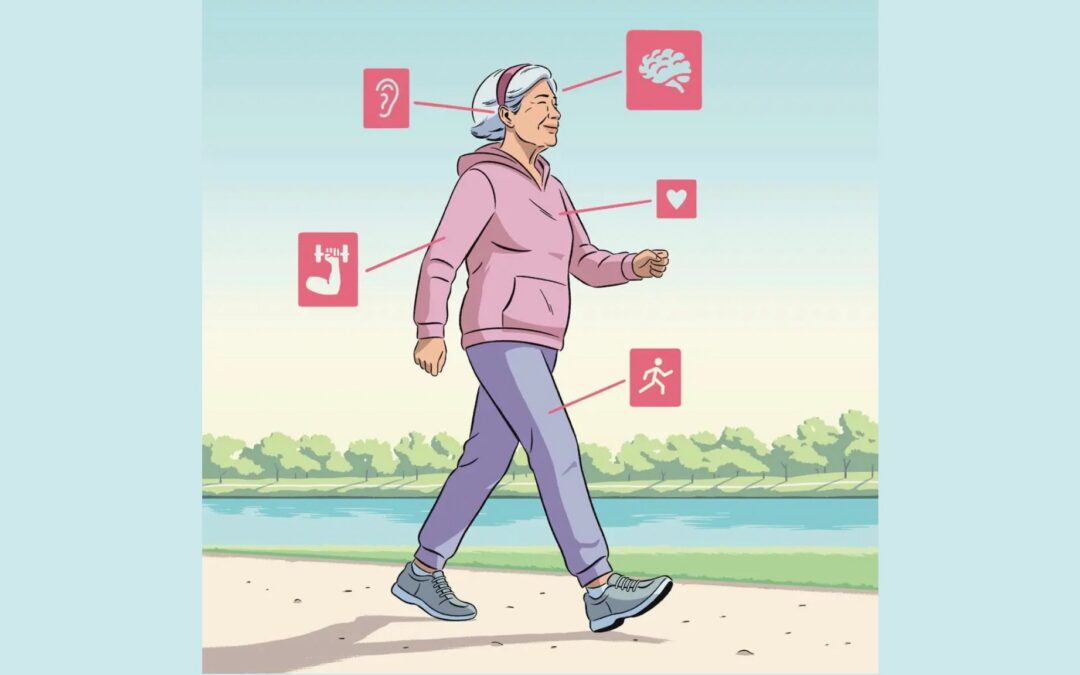
Intrinsic Capacity is a new term experts are hoping to use to determine a person’s overall health in an effort to implement interventions for a longer, healthier, and happier life. Intrinsic Capacity is measured in five different key areas including cognition, locomotion, sensory capacity, psychological well-being, and vitality. Several studies are being implemented across the US to learn more on how to improve the accuracy of this metric and use it, eventually, for all ages.

LADA: Why So Many Adults Are Misdiagnosed With Type 2 Diabetes
A YouTube discussion from Taking Care of Your Diabetes (TCOYD) on why 4 in 10 people who are diagnosed with Latent Autoimmune Diabetes in Adults (LADA) are told they have Type 2 Diabetes first and the impact of this misdiagnosis on their health and progress.

Interview – An Endo’s View: From the Other Side of the Examination Table
I conducted the interview below with my own endocrinologist Dr. David Lam. Our first visit lasted 90 minutes. We talked about diabetes only the last half hour. Lam is smart, tech savvy and responsive. As you might have guessed he is also compassionate, prizes partnership, and sees me as a person, not merely a condition. My husband was impressed when Dr. Lam stayed in text-touch with me, switching me from Lantus to Tresiba, over a weekend. I wanted to understand how he sees our challenges aging with type 1 diabetes and the ones he faces every day working within our industrialized health care system. He didn’t hesitate when I asked for this interview, so here’s an endocrinologist’s view from the other side of the examination table.

The New Science of Brain Workouts, Beyond Sudoku and Crosswords
Forget holding hands—new research reveals a surprising twist in how two people can become a dynamic duo against sudden loss of balance. A recent study, published in the Journal of the Royal Society Interface, demonstrates that when two individuals walk side by side, a rigid link between them dramatically accelerates balance recovery after unexpected slips.
Honored and delight to now know John, Liz, and Riva through our thriving, connected NYC circle! Both of their marriages are inspirational: cookies, silver linings, world-views, love and life with T1d.
Love THIS!
This is such an uplifting story .. thank you so much Riva for sharing !
I loved it too … thanks for your comments!!!
This is such an uplifting story ! Thank you so much! Now to get on a dating app .. and find a partner in crime. 🤣🤣