

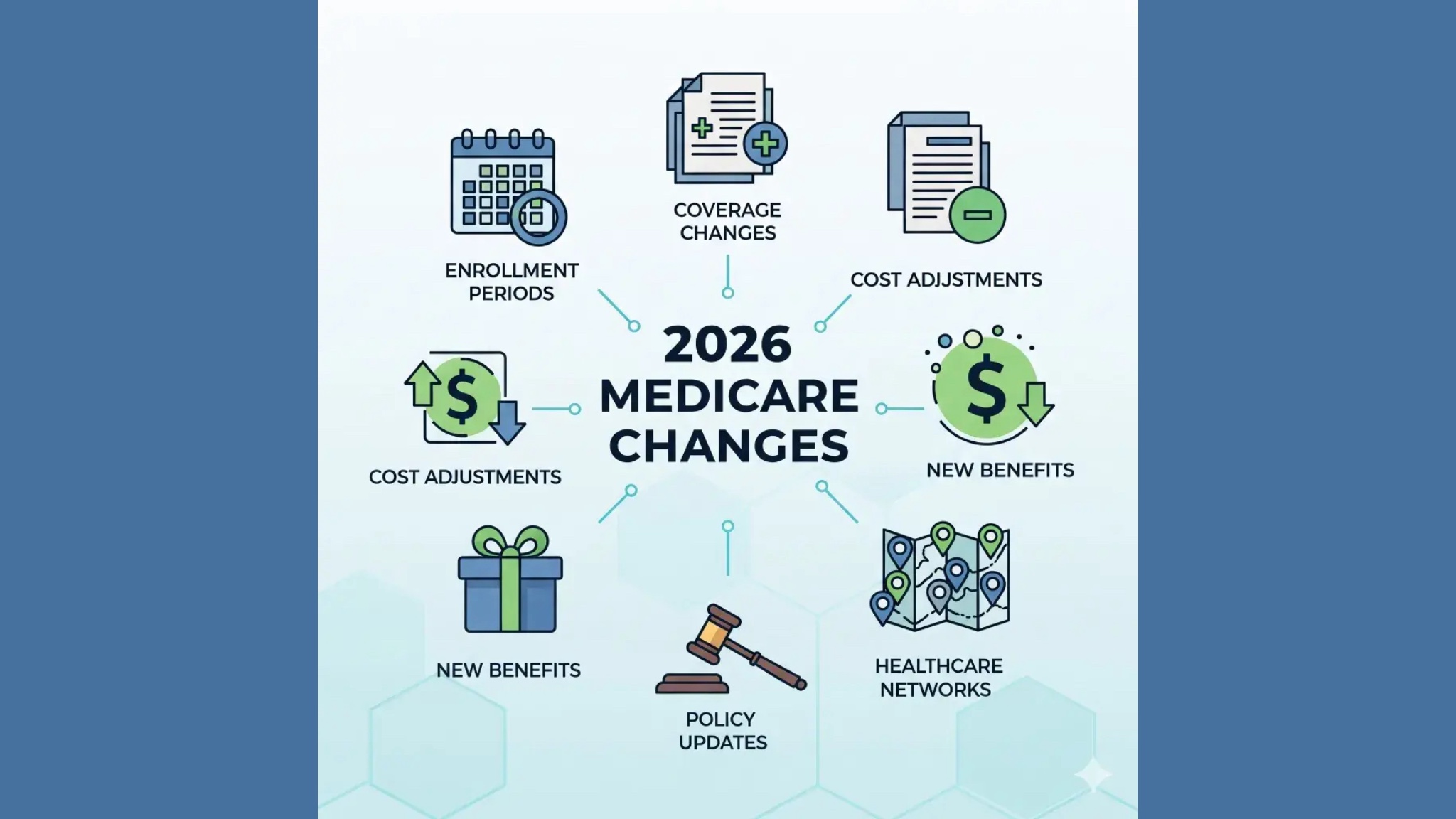
Medicare, Medigap, and the Cost of Aging with Type 1: What’s Changing in 2026
By: Kelli Deferme | April 20, 2026
If you’ve lived with Type 1 diabetes long enough to reach Medicare, you already know something most people don’t: that managing this disease is a decades-long financial project, not just a medical one. Insulin, pumps, CGMs, test strips, specialist visits, labs, and the insurance plans wrapped around all of it add up to a running tab that never closes.
So when your Medicare Supplement renewal arrived this year with another double-digit premium increase, it probably didn’t feel like news.
This article is about what’s actually happening with Medigap premiums in 2026, what’s changing in Medicare’s diabetes coverage (some of it genuinely good), and the financial assistance programs that thousands of older adults with T1D qualify for but never use because no one tells them about them.
Why Medigap Premiums Keep Going Up
Medicare Supplement premiums are climbing by double digits again in 2026, and it’s happening nationwide. In 2025, rate hikes ranged from 8% to as high as 50% depending on the carrier and state, some of the steepest increases ever recorded in the Medigap market. Early 2026 filings from industry actuaries show rate increases trending even higher than 2024 and 2025 for most major carriers.
A few things worth understanding about how this works:
Premium increases are pooled, not personal. No one is being singled out for their claims. If you’ve had expensive years (and most of us have), your individual usage doesn’t drive your premium. Rates are calculated across an entire pool of policyholders. That’s also why you can’t be dropped for filing too many claims: Medigap policies are guaranteed renewable as long as you pay your premium on time.
The underlying drivers aren’t going away. Healthcare inflation continues to outpace general inflation. Hospital costs, provider payments, and new treatments are all more expensive each year. An aging population uses more services. Medicare’s own costs are rising, which feeds directly into Medigap premiums.
The system we have puts these costs on your premium notice rather than distributing them through taxes. Most other developed countries fund healthcare publicly, which means rising costs show up differently (through tax policy rather than monthly insurance bills). In the US, the structure of private Medigap insurance means when medical costs rise, policyholders feel it directly.
None of this makes a 15% premium hike easier to absorb on a fixed income. But understanding why it’s happening can help you separate “something is wrong with my plan” (usually not the case) from “the whole system is squeezing older adults, especially those with chronic conditions, harder each year” (usually the real story).
What’s Actually New in 2026 for People with T1D
A few important changes took effect this year, and most of them do help:
$35 monthly insulin cap, now fully codified. Under both Part B (pump insulin) and Part D (injected and inhaled insulin), your cost for a one-month supply of each covered insulin product is capped at $35, with no deductible applied. This has been in place since 2023 but the 2026 final rule locked it in across all Part D plans. If your plan is charging you more than $35 for an insulin on its formulary, something is wrong. Call your plan.
$2,100 annual out-of-pocket cap on Part D drugs. This one is new for 2026 and it’s a big deal for anyone on expensive medications. Once your total out-of-pocket spending on covered Part D drugs hits $2,100 in a calendar year, you pay $0 for the rest of the year. For T1Ds stacking insulin, GLP-1s (if covered), and other prescriptions, this can mean thousands in savings versus prior years.
Medicare Part B premium rose to $202.90 (up from $185 in 2025), and the Part B deductible climbed to $283. These are federal and apply to every Medicare beneficiary. If you have a Plan G Medigap policy, you pay that $283 deductible yourself before Medigap kicks in.
First Medicare-negotiated drug prices took effect January 1, 2026, covering 10 high-cost, widely used Part D medications. More drugs will be added in future negotiation rounds.
How Medicare Covers T1D Care (and Where the Gaps Are)
This is where things get complicated, because diabetes care is split across Part B and Part D, and your Medigap plan only fills gaps in Part B. Here’s the breakdown that most people with T1D on Medicare find confusing at first:
Covered Under Part B (Medigap Helps with the 20% Coinsurance)
- Blood glucose monitors, test strips, and lancets
- Tubed insulin pumps and the insulin used in them, classified as durable medical equipment. This includes the Medtronic MiniMed 780G, Tandem t:slim X2, Tandem Mobi, and the Beta Bionics iLet.
- Continuous glucose monitors (Dexcom G6/G7, FreeStyle Libre 2/3), if you meet the medical criteria
- Diabetes Self-Management Training (up to 10 hours)
- Annual diabetic retinopathy eye exams
- Therapeutic shoes and inserts for people with diabetic foot complications
Covered Under Part D (Medigap Does NOT Help with These)
- Injectable and inhaled insulin not used with a pump (vials, pens, Afrezza)
- Tubeless patch pumps like the Omnipod 5 and Sequel Twiist, which are treated as disposable supplies rather than durable equipment
- Oral diabetes medications like metformin
- Non-insulin injectables prescribed for T2D or off-label for T1D (GLP-1s, etc.)
- Insulin-related supplies: syringes, needles, alcohol swabs, gauze, pen tips
A Few Notes Specific to Pump Users
Pump coverage depends on the pump’s design, not the brand. Tubed pumps go through Part B because they’re durable equipment. Tubeless patch pumps go through Part D because each pod is disposable. This matters because your out-of-pocket experience looks different depending on which route your pump takes.
Important to note: Part D plans don’t cover the insulin used in a durable tubed pump. That insulin comes from a DME supplier under Part B instead. If you’re switching from injections to a tubed pump on Medicare, you’ll also be switching where you get your insulin from.
Coverage for newer pumps can vary by specific Part D plan formulary, especially for systems that launched in the past year or two. Always confirm with your plan before committing to a device switch.
Financial Help Many Older Adults with T1D Don’t Know They Qualify For
This is arguably the most important section of this article, because these programs are massively underused. Awareness is low, the names are confusing, and many people assume they earn too much to qualify when they actually don’t.
Medicare Savings Programs (MSPs)
State-run, income-based programs that can cover your Part B premium ($202.90/month in 2026) and, depending on tier, your Part A and B deductibles, coinsurance, and copays. Four tiers exist: QMB, SLMB, QI, and QDWI, each with different income thresholds.
Enrollment can put more than $2,400 a year back into your budget, and qualifying for QMB, SLMB, or QI also automatically enrolls you in Extra Help. Apply through your state Medicaid agency.
Federal 2026 monthly income limits (starting points, states often use more generous rules):
- QMB: $1,350 single / $1,824 married
- SLMB: $1,616 single / $2,184 married
- QI: $1,816 single / $2,455 married
Apply even if you think you’re slightly over the limit. Some states disregard certain types of income and assets, so the federal floor isn’t always the final answer.
Extra Help (Low Income Subsidy for Part D)
Lowers Part D prescription drug costs substantially. In 2026, qualifying enrollees pay no more than $5.10 for generics and $12.65 for brand-name drugs, with no Part D deductible and no premium up to a benchmark amount. The Social Security Administration estimates Extra Help is worth roughly $6,200 a year on average.
2026 income limits: approximately $2,015/month for a single person and $2,725/month for a couple. Apply at ssa.gov/extrahelp.
State Health Insurance Assistance Programs (SHIPs)
Free, unbiased Medicare counseling in every state. SHIP counselors don’t sell insurance. They help you compare plans, apply for assistance programs, navigate billing disputes, and understand your coverage options. Find your state’s SHIP at shiphelp.org or call 1-877-839-2675.
BenefitsCheckUp
Run by the National Council on Aging at benefitscheckup.org, this is a free online screener for more than 2,000 assistance programs covering healthcare, prescriptions, food, utilities, housing, and property taxes. It takes about 15 minutes and is probably the fastest way to find out what you qualify for.
Manufacturer Patient Assistance
Insulin manufacturers (Eli Lilly, Novo Nordisk, Sanofi) all run patient assistance programs. Pump and CGM manufacturers also have financial assistance programs for supplies. Note that many manufacturer copay cards exclude Medicare beneficiaries by federal rule, but patient assistance programs for low-income individuals often still apply. Check directly with the manufacturer.
Three helpful directories:
- NeedyMeds: searchable database of patient assistance programs
- American Diabetes Association: diabetes-specific resources and advocacy
- GetInsulin.org: Insulin access and affordability support
What To Do if Your Renewal Notice Lands Hard
If your 2026 Medigap premium feels like too much to absorb, a few concrete steps:
- Run the BenefitsCheckUp screener. Fifteen minutes, no cost. You might find you qualify for thousands in annual assistance.
- Call your state SHIP. Free counseling, unbiased, every state. They can walk through your full Medicare situation, not just premiums.
- Compare Medigap carriers in your state. All Plan G policies cover the same things by law. The only difference between carriers is premium and rate stability. If you’re in good health (relatively speaking, for a T1D who’s made it to 65+), you may be able to switch to a lower-cost carrier through underwriting. A licensed independent broker in your state can run this comparison.
- Review your Part D plan during Open Enrollment (October 15 to December 7). Formularies and pricing change every year. The plan that was best for you last year might not be this year.
A note on finding help: You can always connect with a licensed independent broker in your state. State rules, carrier availability, and rate filings vary significantly. A local broker will know your state’s landscape. Your SHIP is a free option if you prefer unbiased counseling over a broker relationship.
The Bigger Picture
The cost of managing Type 1 doesn’t go down as you age. It generally goes up. The treatments get more sophisticated, the complications accumulate, and the insurance structure meant to protect you gets more expensive each year.
What has improved meaningfully in 2026: insulin is capped at $35, Part D has a real out-of-pocket ceiling for the first time, and Medicare is starting to negotiate drug prices. These are incremental wins against a system that still costs too much, but they’re not nothing. For a T1D on Medicare taking multiple expensive medications and wearing a CGM and/or pump, they could mean thousands of dollars back in your budget this year.
The other piece, and the reason this article exists, is that the assistance programs are there. They’re underused because they’re buried under acronyms and state-by-state complexity. But if your income qualifies you (and many more people qualify than realize), the MSP + Extra Help combination alone can offset a big chunk of what rising Medigap premiums are eating.
T1D is a marathon. Making it through with your finances intact is unfortunately part of the race. The tools exist and the community is here to help you navigate the changes. Every mile of the race is easier when you’re not running it alone.
Sources
Medicare premiums, deductibles, and federal cost structure
- 2026 Medicare Parts A & B Premiums and Deductibles (CMS)
- Medicare Coverage of Diabetes Supplies (CMS)
- Insulin Coverage (Medicare.gov)
- Medicare and T1D (Breakthrough T1D)
Medigap rate trends
- Medicare Supplement Rate Actions 2026 Q1 (Telos Actuarial)
- Medicare Supplement Plan G Costs in 2026 (Policy Guide)
Assistance programs
- Medicare Savings Programs (Medicare.gov)
- Medicare Savings Program types (NCOA)
- Extra Help Income Limits & Eligibility (NCOA)
- Help with Drug Costs (Medicare.gov)
Application and counseling
- Social Security Administration Extra Help application: ssa.gov/extrahelp
- State Health Insurance Assistance Program (SHIP): shiphelp.org or 1-877-839-2675
- NCOA BenefitsCheckUp: benefitscheckup.org
Diabetes-specific patient assistance
Recent Stories & News

Choosing Your 2027 Medicare Plan: An Open Enrollment Guide for People with Type 1 Diabetes
We have created this guide on how to choose your 2027 medicare plan including important dates, commons mistakes, and a checklist of things to do. There are also special insights on what you need to keep in mind, programs that could be helpful, and changes from the previous year. Read the full article for everything you need to know!

Intrinsic Capacity: The Most Important Longevity Term You’ve Probably Never Heard Of
Intrinsic Capacity is a new term experts are hoping to use to determine a person’s overall health in an effort to implement interventions for a longer, healthier, and happier life. Intrinsic Capacity is measured in five different key areas including cognition, locomotion, sensory capacity, psychological well-being, and vitality. Several studies are being implemented across the US to learn more on how to improve the accuracy of this metric and use it, eventually, for all ages.

LADA: Why So Many Adults Are Misdiagnosed With Type 2 Diabetes
A YouTube discussion from Taking Care of Your Diabetes (TCOYD) on why 4 in 10 people who are diagnosed with Latent Autoimmune Diabetes in Adults (LADA) are told they have Type 2 Diabetes first and the impact of this misdiagnosis on their health and progress.

Interview – An Endo’s View: From the Other Side of the Examination Table
I conducted the interview below with my own endocrinologist Dr. David Lam. Our first visit lasted 90 minutes. We talked about diabetes only the last half hour. Lam is smart, tech savvy and responsive. As you might have guessed he is also compassionate, prizes partnership, and sees me as a person, not merely a condition. My husband was impressed when Dr. Lam stayed in text-touch with me, switching me from Lantus to Tresiba, over a weekend. I wanted to understand how he sees our challenges aging with type 1 diabetes and the ones he faces every day working within our industrialized health care system. He didn’t hesitate when I asked for this interview, so here’s an endocrinologist’s view from the other side of the examination table.

The New Science of Brain Workouts, Beyond Sudoku and Crosswords
Forget holding hands—new research reveals a surprising twist in how two people can become a dynamic duo against sudden loss of balance. A recent study, published in the Journal of the Royal Society Interface, demonstrates that when two individuals walk side by side, a rigid link between them dramatically accelerates balance recovery after unexpected slips.
0 Comments