


Choosing Your 2027 Medicare Plan: An Open Enrollment Guide for People with Type 1 Diabetes
Compiled by Kelli Deferme
Published September, 2026
Companion to our earlier article on Medicare, Medigap, and what changed in 2026 linked HERE.
Open enrollment runs October 15 to December 7. What you choose in the fall sets what you pay for insulin, pump supplies, and sensors for all of 2027.
Most years, staying put is a fine decision. This year there is a specific reason to compare, and a few things that catch people with type 1 in particular. That is what this article will cover.
Important 2026 Dates
Late September. Your current plan mails you an Annual Notice of Change. It is easy to mistake for junk mail. It is the only document that tells you what your own plan is doing next year.
October 1. 2027 plan details go live on Medicare’s Plan Finder. You cannot enroll yet, but you can look and compare.
October 15. Enrollment opens.
December 7. Enrollment closes. Your plan has to receive your request by this date, not just be postmarked.
January 1, 2027. Your choice takes effect.
Do nothing and you are re-enrolled automatically in your same plan at next year’s price with next year’s drug list.
The January 1 to March 31 window only lets Medicare Advantage members switch Advantage plans or return to Original Medicare. It cannot fix a Part D decision.
Why compare this year
A program called the Part D Premium Stabilization Demonstration has held down premiums on standalone drug plans for the past two years. It ends December 31, 2026.
It was worth about $16 a month against an average standalone premium of roughly $36. CMS expects most people to pay under $10 more per month. KFF analysts note that removing a $16 support from a $36 premium is a large proportional change and that plans may respond unpredictably.
What you pay today is not a reliable guide to what you will pay in January.
This affects people with Original Medicare plus a standalone Part D plan. If your drug coverage is bundled into Medicare Advantage, this change mostly passes you by.
Two other 2027 changes: the Part D out-of-pocket cap rises to $2,400, up from $2,100 and the deductible rises to $700, up from $615. This deductible figure is the maximum a plan is allowed to charge, not what every plan charges, so it is one more reason to compare prices, rather than assume.
What to gather first
Your medication list. Every prescription, exact dose, quantity per fill. Your pharmacy can print this out for you if you ask.
Your pharmacy name, and whether you use mail order.
Your Annual Notice of Change. You should receive this in the mail in September. Check three things: new premium, new deductible, and whether anything you take changed tiers or came off the formulary.
Comparing plans
Go to medicare.gov/plan-compare. It is free and does not sell anything.
- Enter your drugs with exact doses and quantities. A wrong dose gives you a wrong price.
- Enter your pharmacy. The same plan costs different amounts depending on whether your pharmacy is preferred, standard, or out of network.
- Sort by total annual cost, not premium. This is the most important step. Plan Finder shows an estimated yearly total combining premium, deductible, and copays. The cheapest premium often produces the highest total.
- Look up your insulin and other medications by name and check what tier they are on.
- Check the restriction flags. Prior authorization, step therapy, quantity limits. Step therapy can require you to fail on a different product before the plan covers what already works for you.
- Compare at least three plans.
What Plan Finder will not tell you
Tubed pump users: your insulin is not a Part D question. Insulin delivered through a traditional tubed pump is covered under Part B as a supply for durable medical equipment. It comes from a DME supplier, not your pharmacy.
If you inject or use a disposable or patch pump, your insulin runs through Part D.
The $35 monthly cap applies under both Part B and Part D, with no deductible first, so cost protection follows you either way. The supplier does not. If you are considering a pump change for 2027, settle the supplier question before you switch.
Confirm your CGM and pump suppliers separately. CGMs and tubed pumps are covered under Part B as durable medical equipment, so check that your supplier is still contracted with your plan of choice. Omnipod runs through Part D instead, so check it against the plan formulary the same way you check insulin. Either way, confirm before January. People often find out something is changed only when a supply reorder does not go through.
Medicare Advantage: check the network before the drug list. Confirm your endocrinologist/care team is in network for 2027.
Medigap
We covered why Medigap premiums keep climbing in our earlier article: pooled risk, age-related pricing, general cost growth, and closed policy blocks that get more expensive as healthier people leave them. None of these changes are about you personally, but they do affect you, especially if your renewal came with another double-digit increase this year.
Before you act on it, one thing to know:
In most states you can only switch Medigap plans without medical underwriting during your one-time six-month window when you first turn 65 and enroll in Part B. After that, an insurer can decline you or charge more based on your health. Fall open enrollment does not reopen this window.
A few states, including Connecticut, Maine, Massachusetts, New York, and Washington, offer broader ongoing switching rights. Rules vary and change. Otherwise, assume switching requires underwriting, and do not assume you will pass.
Do not cancel a Medigap policy until the replacement is approved in writing.
If the premium is unaffordable, call SHIP first. SHIP stands for State Health Insurance Assistance Program: free, one-on-one Medicare counseling available in every state, run by trained counselors who do not sell plans and earn no commission on your decision. Then ask your current insurer whether you can move to a lower-benefit plan letter within the same company. Some allow this with reduced or no underwriting.
Programs worth checking out
Both are available year-round, not just during open enrollment.
Extra Help (Part D Low Income Subsidy). 2026 limits were $23,940 income and $18,090 resources for an individual, $32,460 and $36,100 for a couple. Limits usually rise each year. If you qualify, your premium and deductible go to zero and copays drop to a few dollars. Your home and car do not count as resources.
Medicare Savings Programs. Four state-run programs covering some or all of your Part B premium. QMB also covers deductibles and coinsurance. 2026 individual monthly income limits: QMB $1,350, SLMB $1,616, QI $1,816. Resource limit $9,950 individual, $14,910 couple.
Enrolling in any Medicare Savings Program automatically qualifies you for Extra Help.
Apply even if you are slightly over. States have latitude and many disregard more income than the federal minimum requires.
Common mistakes
-
- Choosing plans based on premium instead of total annual cost
- Entering approximate doses vs. exact doses
- Cancelling Medigap before the replacement is approved
- Waiting until December, when the tool is slow and the phone lines are backed up
Free help
SHIP (State Health Insurance Assistance Program). Free one-on-one counseling in every state. No commissions, no plan sales. www.shiphelp.org
1-800-MEDICARE. Open 24 hours. Call in October rather than December.
Anyone who calls you unprompted about your Medicare plan is selling something. Medicare does not cold-call.
Checklist
- Get a printed medication list from your pharmacy
- Read your Annual Notice of Change in late September
- Look at 2027 plans on Plan Finder starting October 1
- Compare at least three plans by total annual cost
- Confirm your insulin by name on the formulary
- Check prior authorization and step therapy flags
- Confirm pump, CGM, and DME suppliers for 2027
- If in Medicare Advantage, confirm your endocrinologist/care team is in network
- Check Extra Help and Medicare Savings Program eligibility
- Do not change or cancel Medigap without knowing your state’s underwriting rules
- Enroll by December 7
If you get stuck, bring the question to the T1Dto100 community in the Facebook group. Someone here has likely already worked through the same problem.
Figures reflect published 2026 amounts and announced or projected 2027 amounts as of August 2026. Confirm final numbers on Plan Finder when 2027 data goes live October 1. This is general information, not insurance or financial advice. T1Dto100 does not sell or recommend specific plans.
Sources: Medicare.gov open enrollment, insulin coverage, Extra Help, and Medicare Savings Programs; CMS open enrollment partner resources; reporting on the expiration of the Part D Premium Stabilization Demonstration, July 2026.
Recent Stories & News
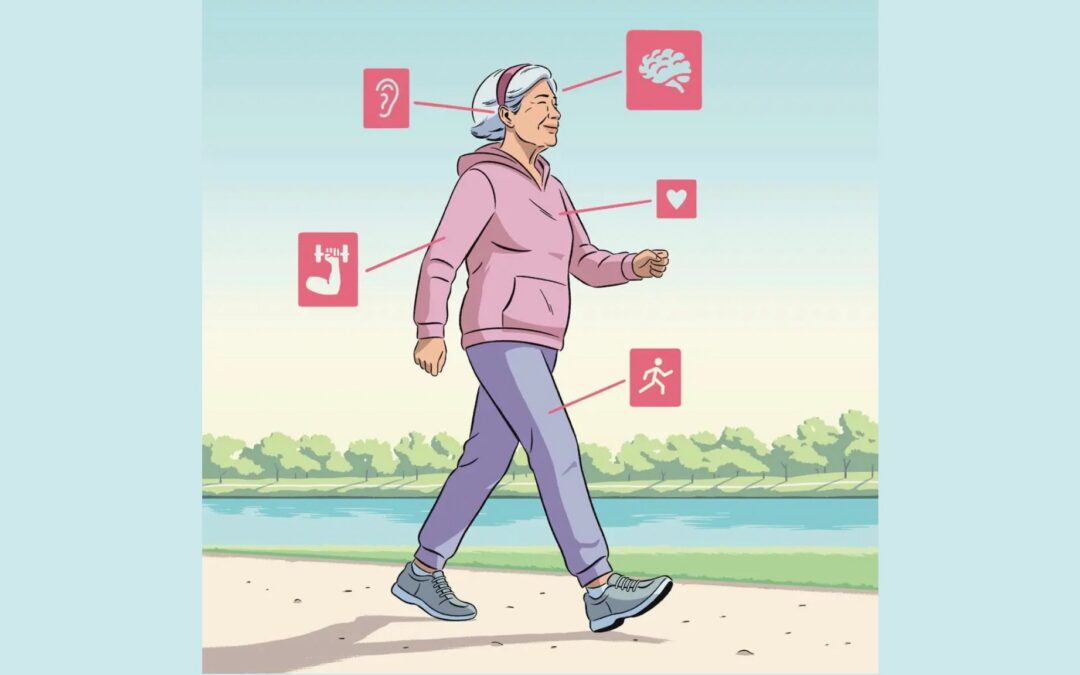
Intrinsic Capacity: The Most Important Longevity Term You’ve Probably Never Heard Of
Intrinsic Capacity is a new term experts are hoping to use to determine a person’s overall health in an effort to implement interventions for a longer, healthier, and happier life. Intrinsic Capacity is measured in five different key areas including cognition, locomotion, sensory capacity, psychological well-being, and vitality. Several studies are being implemented across the US to learn more on how to improve the accuracy of this metric and use it, eventually, for all ages.

LADA: Why So Many Adults Are Misdiagnosed With Type 2 Diabetes
A YouTube discussion from Taking Care of Your Diabetes (TCOYD) on why 4 in 10 people who are diagnosed with Latent Autoimmune Diabetes in Adults (LADA) are told they have Type 2 Diabetes first and the impact of this misdiagnosis on their health and progress.

Interview – An Endo’s View: From the Other Side of the Examination Table
I conducted the interview below with my own endocrinologist Dr. David Lam. Our first visit lasted 90 minutes. We talked about diabetes only the last half hour. Lam is smart, tech savvy and responsive. As you might have guessed he is also compassionate, prizes partnership, and sees me as a person, not merely a condition. My husband was impressed when Dr. Lam stayed in text-touch with me, switching me from Lantus to Tresiba, over a weekend. I wanted to understand how he sees our challenges aging with type 1 diabetes and the ones he faces every day working within our industrialized health care system. He didn’t hesitate when I asked for this interview, so here’s an endocrinologist’s view from the other side of the examination table.

The New Science of Brain Workouts, Beyond Sudoku and Crosswords
Forget holding hands—new research reveals a surprising twist in how two people can become a dynamic duo against sudden loss of balance. A recent study, published in the Journal of the Royal Society Interface, demonstrates that when two individuals walk side by side, a rigid link between them dramatically accelerates balance recovery after unexpected slips.
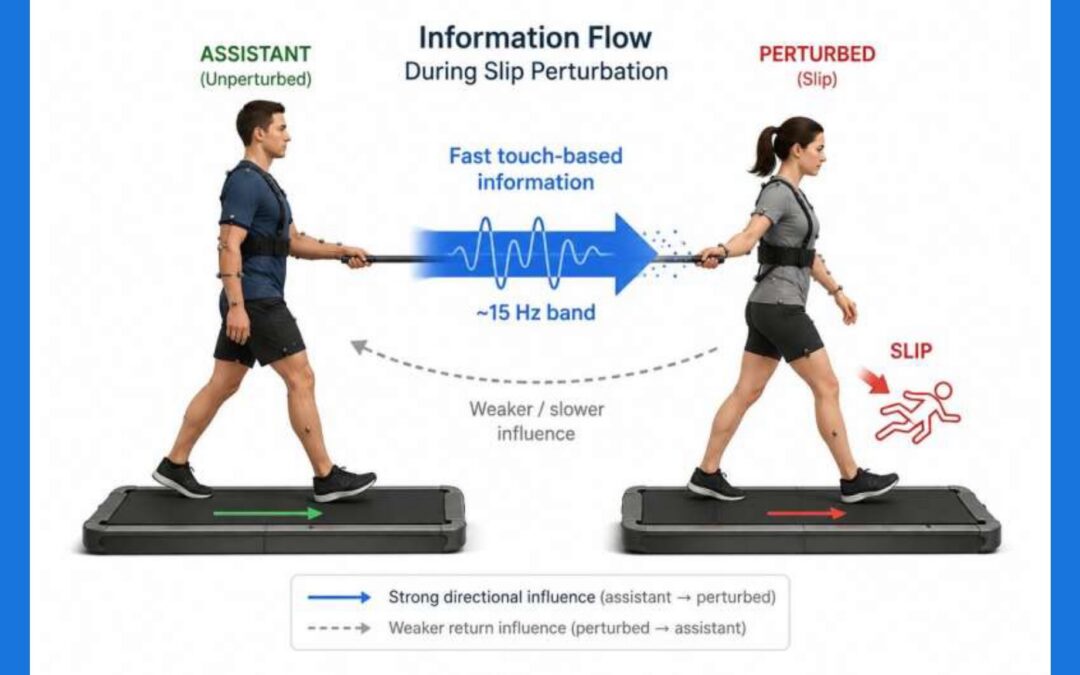
Why Just Sharing a Stick While Walking Can Significantly Improve Balance
Forget holding hands—new research reveals a surprising twist in how two people can become a dynamic duo against sudden loss of balance. A recent study, published in the Journal of the Royal Society Interface, demonstrates that when two individuals walk side by side, a rigid link between them dramatically accelerates balance recovery after unexpected slips.
0 Comments