

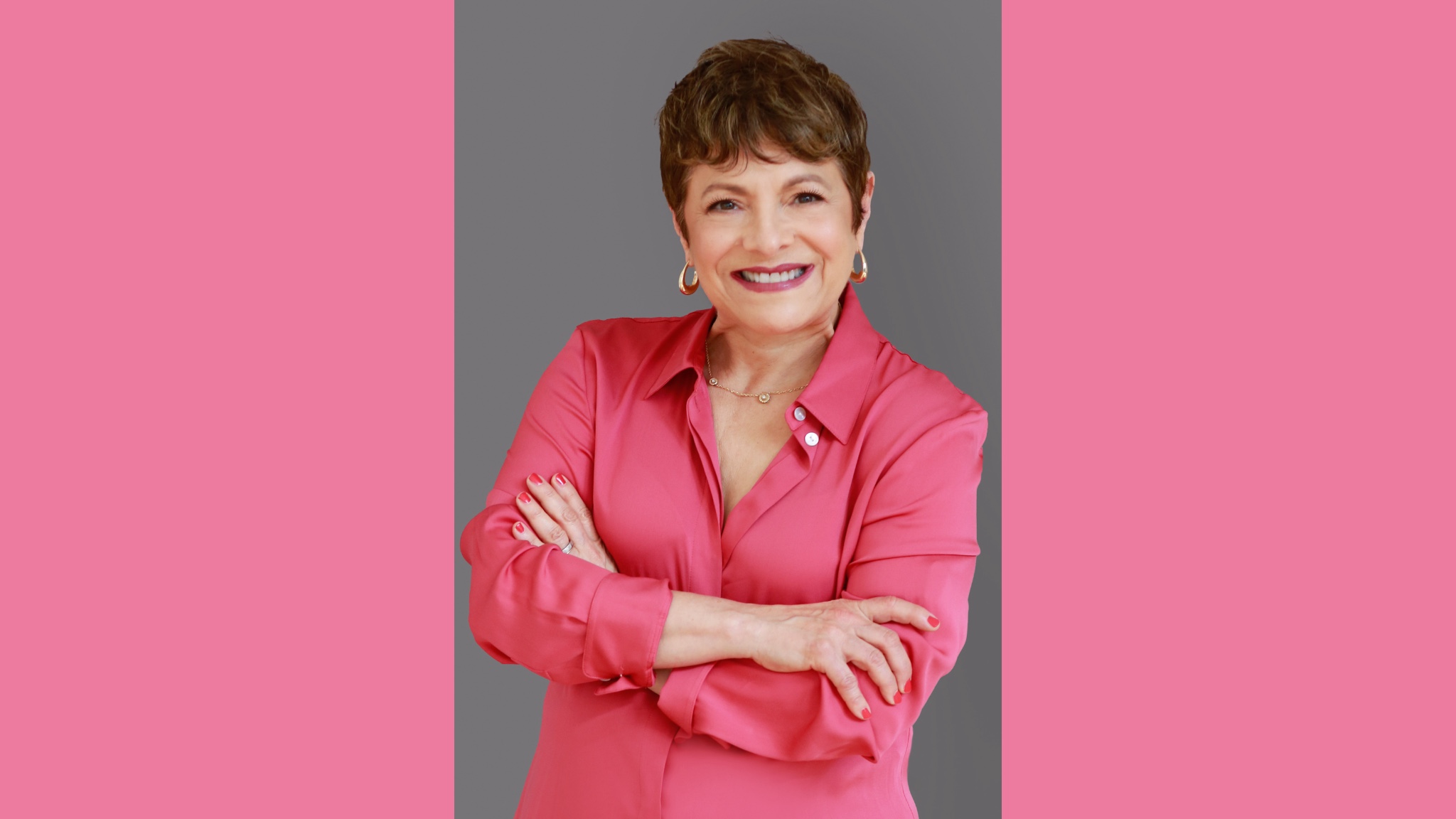
The Wit and Wisdom of Fran Carpentier: 57 Years with Type 1 Diabetes
Interviewed for T1Dto100 by riva greenberg
I knew Fran Carpentier as the former Senior Editor of Parade, the wildly popular national Sunday newspaper magazine. Fran and I have co-mingled at JDRF events (now Breakthrough T1D), where Fran has been an active fundraiser for decades, and sat at long tables of “diabetes-over-50-year” lunches, and even enjoyed a few just-between-us-girls lunches. Yet, I didn’t know that her first husband left her because of her diabetes, nor did I know what she’d do if there were a cure yet not enough to go around. Meet funny, irrepressible Fran Carpentier, who credits much of her management success to the nuns of Bensonhurst, Brooklyn.
Diagnosis Age: 14, Current Age: 71, Years with T1D: 57
Diagnosis
Like most of us, Fran had the typical symptoms of type 1 diabetes and didn’t know it. One day in April 1969 while clothes shopping with her mom, Fran felt so weak that she could barely walk. “Mom, I feel like I’m dying,” she said. Yet her mom, the “original ostrich” as Fran describes her, was afraid of what having diabetes could mean and brushed aside the classic signs of TD1. Until she couldn’t.
During lunch at a family friend’s home, the husband—a kindly biology professor who moonlighted as a pharmacist—took note of Fran’s thirst and frequent trips to the bathroom. He gave her a box of spooled litmus-paper-like strips called Tes-Tape that detected sugar levels in urine, instructing Fran to pee on a piece of tape the next morning. If the paper strip changed color, he explained, her mom should call the pediatrician. At the time, testing one’s urine was the gold standard (talk about fool’s gold!) for diagnosing diabetes. The next morning, Fran followed the professor’s instructions. As she describes, “The urine-soaked tape was so full of sugar, it practically disintegrated!”
The Carpentier family lived in Brooklyn, in an apartment directly above the gas station Fran’s father owned and operated. Her parents had an ingenious way of communicating. When some family matter needed telling, Fran’s mom simply banged on the kitchen pipe, and her father could hear it in the garage. That fateful morning, responding to lots of banging, Mr. C, as the neighborhood kids called him, put aside his tools, came outside, looked up to the second-story window and saw (and heard) his frantic wife yelling out the window, “There’s something wrong with Frances! Something bad!” At that very moment, the local cardiologist stopped by to gas up his car. Hearing the Tes-Tape story, the physician instructed Fran’s father to take her immediately to the office of his longtime best friend and colleague at Long Island College Hospital. Within the hour, Fran and her parents were in front of Dr. Milton Handelsman, a leading diabetologist trained by Elliot Joslin himself. That incredible synchronicity put Fran in the hands of one of the best practitioners in New York City. Fran says, “It was divine intervention.”
riva: Almost like an angel on your shoulder…
Fran: “Truly, and I credit my twelve years of Catholic school—you know, the whole thing, the nuns, the rules, the uniform—as the reason why I’m a ridiculously obedient patient. I keep all my medical appointments, I wait fifteen minutes to eat after taking my insulin. Being pregnant was really tough. My diabetologist, the late, great Dr. Andrew Drexler, and his unparalleled CDE Carolyn Robertson, required their pregnant patients to phone in their numbers every day. Mind you, this was 1993, long before CGMs and Tidepool and the like, and this hands-on, round-the-clock blood-sugar monitoring by the patient was the protocol for pregnant T1Ds.
This meant doing finger sticks every two hours, and sometimes every hour, around the clock. Yes, I’m talking twelve to twenty finger sticks every single day for the entire nine months. And I did it! I never missed a day or a finger stick. Because the health of the fetus was at stake. At the beginning of my second trimester, I received one of the greatest compliments in my life—more of a validation, really—when one of the young women whose sole job was to record each and every one of the pregnant patient’s blood sugars and report them back to Dr. Drexler and Carolyn, actually said to me, unprompted, “You know, Fran, when you report your numbers to us, we know that you’re not making anything up. We know that you’re doing everything exactly the way the doctor wants you to do it. We trust you.”
I grew up a goody two-shoes. Partly I felt I had to be the good one because my brother was the rebellious one. I honestly remember thinking on the night of my diagnosis, while laying in bed, “Well, God, if you had to send this to anyone in my family it’s good you sent it to me because I know I will know what to do, and I will take care of it.” Ira (Fran’s husband) went to Yeshiva. He was taught to think and ask why. Me? I was taught to obey!
riva: So maybe one of your superpowers is obedience?
Fran: Yes, and I have tremendous willpower. Growing up in Brooklyn, my parents always had cake and candy in the house because you never knew when people would stop by. So, I have candy out all the time. I’m hard-wired that way. But I live in Manhattan, and in Manhattan no one just stops by! Still, I’m smart enough to buy candy that comes in wrappers!
I’m also very good at…what is it… rationalizing. Just yesterday someone said to me, “Oh, no, you can’t eat that,” and I said, “No, I can eat anything, anything I want. But I choose not to eat that.” People think it’s deprivation not to eat something, but I make the choice. To me that’s power.
riva: I think you’re looking for the word reframe…
Fran: Yes, absolutely, I reframe. Take, for example, the day of my grandniece’s wedding. Right after a beautiful 45-minute church ceremony, my CGM alarm starts blaring. It was loud, so, so loud. Until that moment, about 100 people, some of them dressed to the nines in full-length gowns and tuxedos, were enjoying the magic of the day and then, suddenly, T1D rears its ugly and, in this case, loud head, and everyone is staring at me. I had to say to myself “Thank God my blood sugar didn’t crash seven minutes earlier during their ‘I do’s’!” That’s an example of reframing at its best!
riva: So I’m hearing great skills, reframing, willpower, fortitude… are there times managing diabetes just gets to you?
Fran: Not often, really, but just yesterday I was coming close to giving myself a pity party.
riva: Hah, like my friend. He’d get a few beers and a bag of chips, sit on the couch, eat, drink and, just before he went too far, start calling his friends. The deal was they had to tell him how much they loved and supported him. Then he put the beer and chips away, and he was fine. Somehow, though, I don’t see you doing that.
Fran: No, I don’t do that. It’s not my style. Still, about twice a year, when I feel like I just can’t take it anymore, I tell Ira, “Oh, I feel so bad for me, I need your pity!” Ira is an internist, and he has lots of patients with diabetes, albeit mostly type 2s. Still, he gets the drill. He will say, “I know you’re having a rough time.” But I’m like, “No, you don’t understand! I need more pity than that! Is that so much to ask for? It’s not like I’m asking for jewelry or Prada handbags. I just need someone to hear that I really, can’t, f***ing, stand it anymore. Sometimes, if our son Ben is over, he’ll play along,” Fran laughs.
A significant event due to diabetes
riva: Tell me one dramatic or significant thing that’s happened to you due to your diabetes. For example a hypo, an embarrassment, an achievement, whatever?
Fran: My first husband left me.
riva: I’m sorry, I had no idea.
Fran: I was twenty-two when we got married. We were married for six and a half years. At the time, with my conservative upbringing, the end of my marriage was devastating. It rocked my world.
riva: I know you’re saying this was because of the diabetes, but I assume he knew you had it. You got it at fourteen and got married at twenty-two.
Fran: He knew I had diabetes, I was always very open about it, but he found he couldn’t deal with it. My mother always said, “Don’t let the boys know you have diabetes,” because she thought no one would marry me. Then on my wedding day, picture it, I’m in this magnificent bridal gown made of Alençon lace and my mother is placing the veil on my head and whispers to me, “Frances, I wish you a life of happiness, but don’t have children, because you’ll die.” I always listened to the nuns but I did draw the line at that.
I think that my first husband felt that I made life hard for us. I couldn’t be as spontaneous as he probably wanted me to be. You know this was pre-insulin pumps and CGMs. We were young, he wanted to go out and do things and I felt I had to do things a certain way to keep my sugar really well-controlled. I think I’m the most fun person in the room, but he felt that I was a wet blanket. There was probably truth to it forty years ago. Today, technology has freed up life for us T1Ds. Of course that freedom means relying on all manner of medical apparatus and being visible about it.
riva: Perfect segue. For the young people, what’s so much better today and what are you glad you don’t have to do anymore to manage your diabetes?
Fran: In the old days we were clearly flying by the seat of our pants. None of us knew what we were doing. We had so few tools, so little data. All we had were urine tests and guessing. When I met Ira in 1991, he had patients who were still boiling and sharpening their needles! [Editor’s note: Plastic, disposable syringes came out in the mid-sixties!]
We’ve made so much progress. Today’s insulins are 100% better. They’re faster, so we don’t have to time our meals like before. But the absolute best advance is the pump and CGM talking to each other. Before, an insulin pump was only as good as the patient wearing it. We patients still had to adjust everything. But now, the pump can make adjustments based on the CGM data. I can’t imagine going back to the days when we did not have this technology.
riva: Looking forward, do you have any worries or concerns about aging with type 1 diabetes?
Fran: No, I really do not. Isn’t that crazy? I mean just being old is concern enough, right? Everything hurts. Last night, I wanted to turn in bed, and all my bones creaked. That’s not T1D, that’s simply aging. I guess I should say that, as an aging T1D, my biggest concern are occlusions.
Come April, I will have had T1D for 57 years, and I’ve been on a pump since August 1992—that’s more than 33 years. Hence, I have no more virgin skin. There is scarring and, I don’t know, adhesions I guess underneath my skin. I use the Tandem Tru-Steel Infusion Sets, and I don’t know where else to stick the needle! And when the day comes that I need someone to help me insert my CGM on my back and my stiffening body cannot turn easily…oy! God willing—oops! there’s the divine power again!—when that day comes, my son will be married to a wonderful woman who wouldn’t mind helping out her mother-in-law—maybe she’ll be a nurse! And they’ll live in the apartment right below us. Hah!
riva: I wonder if I’ll be able to read the notches on my syringes. But more concerning, what if I get dementia and don’t remember if I just took my shot?
Fran: Yes, what if I forget I have to change my infusion set! I’d have to rely on Ira and Ben, frightening enough! But then I reason—I reframe!—and tell myself that muscle memory will kick in because I’ve been doing it for so long.
What would you tell a newbie?
riva: What would you tell yourself if you could go back to when you were diagnosed, or what advice would you give someone newly diagnosed with type 1 diabetes?
Fran: I know I have an innate optimism, always have. When they all thought, “oh Frances is gonna go blind, Frances is gonna lose her legs, Frances is gonna die young,” I just thought, no. None of that is going to happen to me. It’s not that I denied it could happen. But I just thought I’m gonna do this right and do it as best as I can. For me, that means being disciplined and I don’t see any of it as a restriction.
That said, it’s not always easy. Like when you’re on vacation and everyone, including your husband, who’s let’s not forget is a physician, wants you to eat things that you wouldn’t normally eat. I sometimes feel like I am a killjoy for them because I’m not loading up on pasta and dessert. But eating certain foods just messes me up, no matter how accurately I count the carbs and no matter how much insulin I take. So, I focus on staying the course. I love the foods I eat. I love green vegetables. I love lean protein. And I really love doing everything in my power to give myself the healthiest future that I can give myself. Here again, it’s reframing—and Catholic-school training!
As for advice, I was at a BreakthroughT1D event not long ago where I met the A-list model Chrissy Teigen, who is married to the musician John Legend. Their son Miles, who is 7, has type 1 diabetes. I flat out told her, “Ms. Teigen, they’re all going to tell you the scary stuff, because we need to raise money for research for a cure. But I promise you, your son is going to be fine. He is not going to lose his limbs or go blind. In fact, now, and as he grows into adulthood, your son is probably going to be healthier than everyone else because he is going to be taking care of himself every single day for the rest of his life.” And I meant what I said. That is what I tell all parents of kids with T1D. That’s what I’d tell someone newly diagnosed.
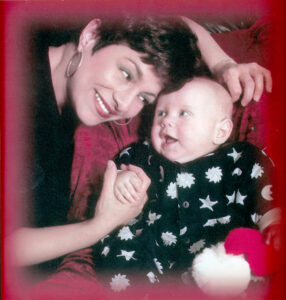
Fran Carpentier with her baby Ben (Nov, 1994)
riva: Yes, those of us living with type 1 a long time have been told two things. One, there will be a cure in five years. And two, our lives would be fifteen years shorter. Well, the first didn’t happen, but the second isn’t happening either. Joslin Diabetes Center now gives medals to people who live 80 years with type 1.
Fran: Fifteen years ago, Dr. Stanley Chang, the world-renowned ophthalmologist and retina specialist, said to me, “You know, Fran, I don’t see the damages in retinas that I used to see. And that’s because today, you people with diabetes know how to take care of yourselves.”
I gave birth to Ben thirty-one years ago. I had a very healthy pregnancy. And I was 39 years old and had already had type 1 diabetes for twenty-five years! During my third trimester, my diabetes educator, Carolyn Robertson, told me that they didn’t yet have research to prove it, but from observations, the babies born to T1D women who take good care of their blood-sugar throughout their pregnancy are healthier, they have better APGAR scores (quick assessment of babies’ health) and they advance more quickly on the developmental charts. And that’s because, to quote Carolyn, “the moms are doing everything right during their pregnancy, including getting proper nutrition.” I was over the moon when, a minute after my son, Ben, was born, the obstetrician announced that he had a perfect APGAR score.
riva: Last question, what’s one positive thing diabetes has given you?
Fran: Diabetes has given me resilience. The ability to roll with the punches. Maybe I was born that way? Still, having type 1 diabetes has made me work that muscle. It’s also given me pride. I’m proud that I’ve been so attentive to my diabetes. I’ve taken really good care of myself. I mean, I know that you can do everything right and still get complications. I’m lucky. No, I’m blessed! April marks 57 years since diagnosis, and I have no complications. So maybe it’s being attentive to my body and my medical team, or it’s what my mother and the nuns called the grace of God, or it’s simply the luck of the draw. Whatever the reason, I’m proud.
One Final Note: If there was a cure, and not enough of said cure to go around, Fran would give hers to a young person. Like so many of us who’ve lived with type 1 diabetes a long time, we have the sense, and maybe as Fran says, the muscle memory, to just keep going.
riva greenberg is the author of three books, hundreds of articles and the long-running blog, diabetes stories. She’s globally recognized for her Flourishing Approach, was an ‘A1C Champion’ peer-mentor, and has lived successfully with type 1 diabetes for 54 years.
6 Comments
Submit a Comment
Recent Stories & News

Choosing Your 2027 Medicare Plan: An Open Enrollment Guide for People with Type 1 Diabetes
We have created this guide on how to choose your 2027 medicare plan including important dates, commons mistakes, and a checklist of things to do. There are also special insights on what you need to keep in mind, programs that could be helpful, and changes from the previous year. Read the full article for everything you need to know!
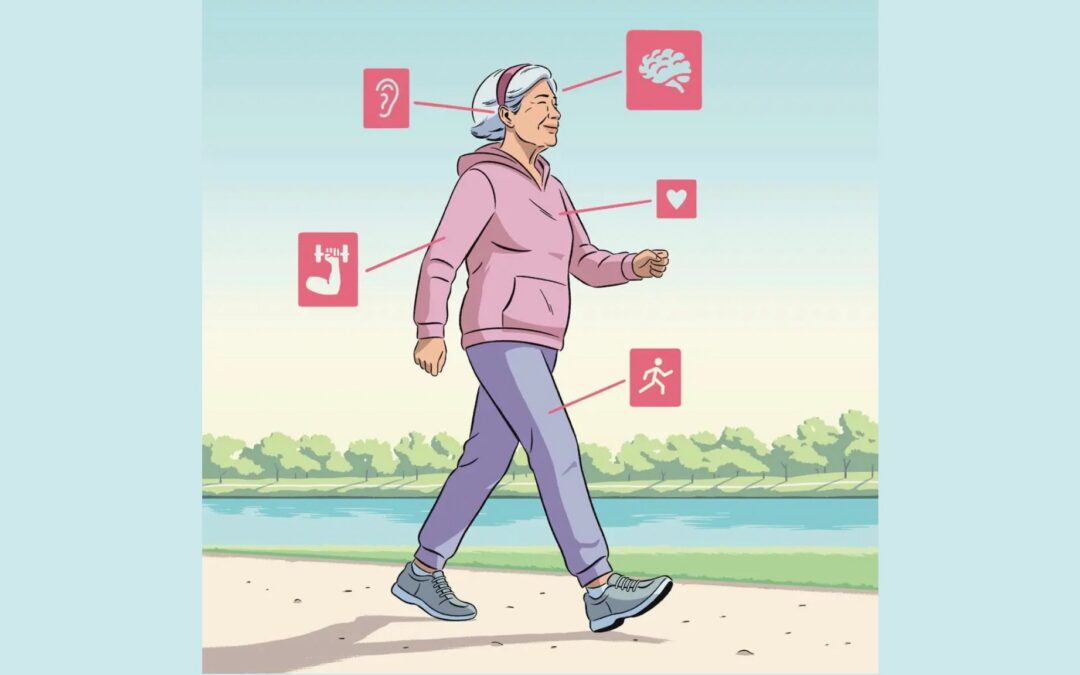
Intrinsic Capacity: The Most Important Longevity Term You’ve Probably Never Heard Of
Intrinsic Capacity is a new term experts are hoping to use to determine a person’s overall health in an effort to implement interventions for a longer, healthier, and happier life. Intrinsic Capacity is measured in five different key areas including cognition, locomotion, sensory capacity, psychological well-being, and vitality. Several studies are being implemented across the US to learn more on how to improve the accuracy of this metric and use it, eventually, for all ages.

LADA: Why So Many Adults Are Misdiagnosed With Type 2 Diabetes
A YouTube discussion from Taking Care of Your Diabetes (TCOYD) on why 4 in 10 people who are diagnosed with Latent Autoimmune Diabetes in Adults (LADA) are told they have Type 2 Diabetes first and the impact of this misdiagnosis on their health and progress.
Interview – An Endo’s View: From the Other Side of the Examination Table
I conducted the interview below with my own endocrinologist Dr. David Lam. Our first visit lasted 90 minutes. We talked about diabetes only the last half hour. Lam is smart, tech savvy and responsive. As you might have guessed he is also compassionate, prizes partnership, and sees me as a person, not merely a condition. My husband was impressed when Dr. Lam stayed in text-touch with me, switching me from Lantus to Tresiba, over a weekend. I wanted to understand how he sees our challenges aging with type 1 diabetes and the ones he faces every day working within our industrialized health care system. He didn’t hesitate when I asked for this interview, so here’s an endocrinologist’s view from the other side of the examination table.

The New Science of Brain Workouts, Beyond Sudoku and Crosswords
Forget holding hands—new research reveals a surprising twist in how two people can become a dynamic duo against sudden loss of balance. A recent study, published in the Journal of the Royal Society Interface, demonstrates that when two individuals walk side by side, a rigid link between them dramatically accelerates balance recovery after unexpected slips.
As a member of this group who also sits at long tables for occasional lunches together, I loved this optimistic interview (great questions and answers). Fran and Riva, I am so lucky that both of you are my upbeat,reframing, beloved friends who’ve lived more than a half century with T1d. 💜💙🙌🏼
Hey, just saw this. Aw…thanks, it’s mutual.
Lovely article Riva, thanks for helping us learn more about Fran.
Bernard, how lovely to see you!
Thanks for helping me feel good about myself and my self care! My sons developed T1 at ages 12 and 22. Then it came as a total shock when I myself was diagnosed with T1 at age 49! I was actually glad (if you can believe it!) because I could truly identify with them personally and share a journey together. ( Mothers love, corny as it may sound.)
Absolutely taking good care of T1 matters! My first son rebelled against the serious daily regime and unfortunately passed away at age 54! My second son and I balance good care without being fanatical and are enjoying life complication free thus far. Mark is 60 and
I just celebrated my 83rd birthday!!
THANK YOU so much, Cindy, for sharing your journey … we can all relate to all that you’ve written! HAPPY BIRTHDAY!!!